Saudi Arabia PDPL Compliance Guide (2026)
The Saudi Personal Data Protection Law (PDPL) represents a major advancement in the region's data privacy landscape. For employers in Saudi Arabia, implementing employee monitoring software requires a careful balance between operational security and the protection of employee privacy. This guide outlines how organizations can leverage on-premise computer monitoring software to maintain data sovereignty and align with PDPL principles.
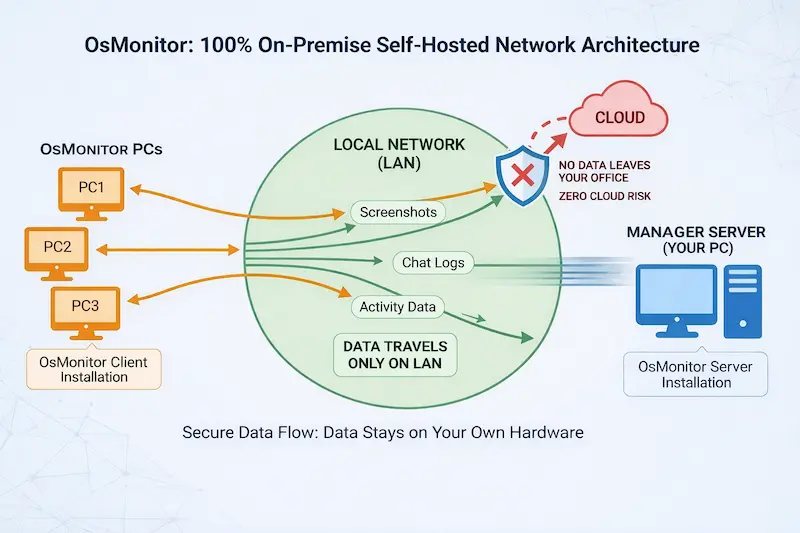
Compliance starts with data sovereignty: Keep employee tracking data strictly on your own local servers within the Kingdom.
Key Principles of PDPL for Employers
Organizations operating in Saudi Arabia should focus on these core pillars when assessing their PC monitoring software and data handling practices:
⚖️ Lawful Basis & Transparency: Employers must ensure that monitoring is conducted for legitimate, clearly defined purposes and that employees are provided with sufficient notice regarding data processing.
📍 Data Sovereignty: The PDPL places significant emphasis on protecting data within the Kingdom. Relying on local, on-premise storage helps ensure that personal data remains under the organization’s direct control, reducing reliance on cross-border data transfer mechanisms.
📋 Data Minimization: The law encourages collecting only the data strictly necessary for the specified purpose. Avoiding the collection of excessive, sensitive, or non-work-related information is key to alignment.
Infrastructure Choice: Why On-Premise Matters
For organizations in regulated sectors, including finance, government contracting, and energy, relying on cloud-based employee tracking software can introduce unnecessary risks regarding where data is stored and who has access to it. By choosing on-premise Windows employee monitoring software, organizations can maintain absolute control over their IT infrastructure, keeping tracking logs on their own servers and directly addressing regulatory concerns regarding external data transfers.
How OsMonitor Can Assist Compliance Controls
OsMonitor provides technical features that may assist organizations in executing their internal data protection policies:
- 🛡️ On-Premise Architecture: Keeps data strictly on your local network, supporting data sovereignty requirements.
- 👁️ Flexible Visibility Modes: Configurable settings support transparency by allowing organizations to provide clear notice and visibility where required.
- ⌨️ No Keystroke Logging: Omitting keylogging functionality helps support the PDPL principle of Data Minimization by avoiding the collection of private passwords or financial data.
- 🔐 Access & Retention Management: Administrators retain centralized control over data access, ensuring logs are protected against unauthorized use.
Frequently Asked Questions
Q: How does the PDPL impact employee monitoring software in Saudi Arabia?
The Personal Data Protection Law (PDPL) establishes strict requirements for the collection, processing, and storage of personal data. Employers using computer monitoring software must ensure data collection is lawful, transparent, and proportionate to the business purpose, with a strong focus on maintaining data sovereignty.
Q: Does OsMonitor assist with data sovereignty requirements?
Yes. OsMonitor’s on-premise architecture allows organizations to keep employee tracking data strictly within their own local network. This technical approach assists organizations in fulfilling their data residency and sovereignty obligations without the complexities of cross-border data transfers.
Q: What are the PDPL requirements for data processing?
The PDPL emphasizes transparency, purpose limitation, and data minimization. Employers are expected to inform employees of monitoring activities and ensure that collected data is necessary, accurate, and protected against unauthorized access.